
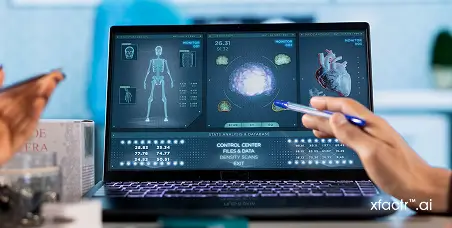
Healthcare today is facing more challenges than ever, with overloaded hospitals, longer patient wait times, and medical staff struggling to keep up with constantly growing data. These pressures make it harder to deliver timely care, and even small mistakes can have serious consequences. That’s where AI in healthcare comes in.
By using intelligent systems, healthcare providers can analyze large volumes of data, identify patterns humans may miss, and improve patient outcomes. Around 60% of healthcare providers already report better results with AI, showing that how AI is transforming healthcare in 2026 is about practical solutions improving lives today.
In this blog, we’ll explore what AI is, how it’s applied in healthcare, its benefits, challenges, real-world use cases, and what the future might hold for AI in healthcare
What is AI?
Before diving into AI in healthcare, let’s quickly understand what’s AI. AI, or artificial intelligence, is a technology that enables machines to think, learn, and make decisions like humans. It can recognize patterns, analyze large amounts of data, and predict outcomes.
It includes machine learning, which learns from data, and deep learning, which can handle complex information like images or speech. AI is already a part of our everyday life, from smart assistants to app suggestions, and its ability to process large amounts of data makes it a powerful tool for healthcare in 2026.
What is AI in Healthcare?
AI in healthcare refers to the application of artificial intelligence technologies to improve medical services. It’s more than just using software for scheduling or billing. AI in healthcare learns from patient data, lab results, imaging scans, and clinical notes to help doctors make smarter decisions.
Unlike traditional software that follows strict instructions, AI systems can adapt. They recognize patterns in patient symptoms, predict potential health risks, and suggest personalized treatment plans. And it’s not limited to hospitals. Clinics, telemedicine platforms, and even wearable devices can leverage AI to provide timely care.
AI in healthcare is about supporting humans, not replacing doctors. By handling repetitive tasks or analyzing complex data, it frees doctors to focus on what they do best—treating patients and making critical decisions.
Top 5 Benefits of AI in Healthcare
The benefits of AI in Health care are wide-ranging:
- Improved diagnostic accuracy: AI algorithms can detect diseases from images or lab results with high precision, often spotting early signs humans might miss. For example, AI-powered imaging tools like those used for breast cancer detection can reach up to 94% accuracy, making scans more reliable.
- Faster data processing: Tasks that take weeks manually, like analyzing thousands of patient records, can be done in minutes, freeing healthcare professionals to focus on treatment.
- Personalized care:AI tracks medical histories and lifestyle data to suggest treatments tailored to each patient’s unique needs. Around 65% of healthcare providers are focusing on AI applications, showing strong adoption in personalized and operational care.
- Operational efficiency:Hospitals can streamline schedules, manage resources better, and reduce costs without compromising quality. Predictive AI models can even reduce hospital readmission rates by up to 20%, improving patient flow and care management.
- Predictive insights:AI helps providers identify trends, predict potential outbreaks, monitor chronic conditions, and guide preventative measures.
Overall, AI goes beyond being a simple tool and is reshaping how healthcare services are provided and organised.
Next, let’s look at some of the most common applications of AI in healthcare.
Common Applications of AI in Healthcare
By analysing past sales, seasonal trends, and buying behaviour, machine learning helps businesses predict demand more accurately and plan inventory or resources better.
- Diagnostics: AI analyzes imaging data such as X-rays, MRIs, and CT scans to detect anomalies quickly and accurately, helping doctors start treatment sooner.
- Personalized treatment:By studying medical history and genetic information, AI recommends therapies tailored to each patient instead of a one-size-fits-all approach
- Virtual nursing assistants and chatbots: These provide 24/7 support by answering health questions, reminding patients about medications, and guiding simple procedures.
- Remote health monitoring:Wearable devices track heart rate, blood sugar, or sleep patterns, sending alerts to doctors if something seems off.
- Drug discovery: AI accelerates research by analyzing millions of chemical compounds to predict which treatments may be effective.
- Hospital workflow automation:AI helps schedule staff, manage patient flow, and streamline operations for smoother hospital management.
These applications show how AI is reshaping healthcare, and real-world use cases highlight its tangible impact. The global AI in healthcare market is projected to reach about $45.2 billion by 2026, reflecting rapid adoption and investment.
Real-World Use Cases of AI in Healthcare
To understand the transformative power of AI, here are three real-world examples:
1. Automating Repetitive Administrative Tasks
AI algorithms are now used to analyze medical images for early signs of cancer. Systems can identify tiny tumors in scans that may be missed by human eyes. This early detection can dramatically improve survival rates
2. AI-Powered Telemedicine
Telehealth platforms now integrate AI to assess symptoms, provide triage recommendations, and prioritize patients who need urgent attention. This has expanded access to quality care in rural or underserved regions.
3. Predictive Patient Monitoring
In intensive care units, AI systems analyze real-time patient data, like heart rate, oxygen levels, and blood pressure, to predict complications before they occur. Nurses and doctors receive alerts to intervene in time, saving lives.
These use cases illustrate how AI is transforming healthcare in 2026 beyond theory. It’s real, practical, and making a tangible difference in patient care every day.
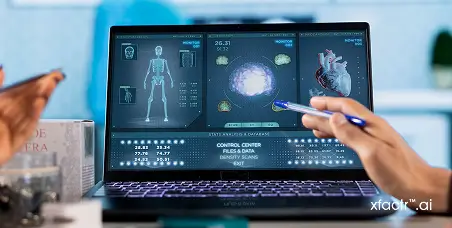
Challenges of AI in Healthcare
- AI is powerful, but it’s not without its hurdles:
- Keeping patient data safe:Medical information is very sensitive. Using it to train AI while keeping it secure is tricky and requires careful handling.
- Bias in AI decisions:If the data used isn’t balanced, AI can end up favoring some groups over others, which may lead to unfair care.
- Regulations slow things down:Hospitals can’t just start using AI tools; these systems need approvals, which can take time
- Building trust: Some patients, and even a few medical staff, might be nervous about letting AI make important decisions.
- Cost of implementation: AI tech can be expensive, and smaller clinics might find it hard to invest.
- Ethical concerns: When AI decisions affect life-or-death situations, like who gets critical care first, it raises tough ethical questions..
- These challenges don’t mean AI can’t succeed. But to really transform healthcare, they need to be understood and addressed carefully.
Future of AI in Healthcare
Looking ahead, the future of AI in Health care is promising. Predictive analytics will allow healthcare providers to prevent illnesses before they occur. AI will integrate seamlessly with telemedicine, making remote care smarter and more efficient.
Robotic surgery powered by AI will enhance precision, while personalized medicine will become even more common as AI analyzes genetic data. AI systems will continue to support doctors, helping them make better decisions without replacing the human touch.
Eventually, real-time insights from AI will guide everyday wellness, helping people monitor their health continuously. And with AI improving patient outcomes and healthcare efficiency, it’s clear that the technology will be central to medical care in the coming years. The future isn’t just about technology-it’s about smarter, safer, and more personalized care.
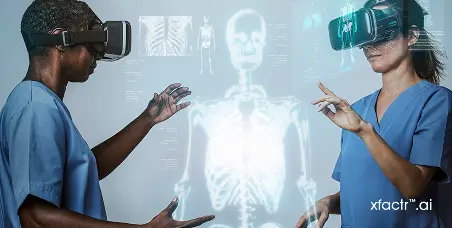
Final Thoughts
AI is no longer something healthcare is planning for later. It’s already changing how doctors diagnose problems, treat patients, and manage hospitals. From spotting diseases earlier to supporting remote care and daily monitoring, AI is helping medical teams make better decisions and deliver care more efficiently. The impact is real, and it’s already being felt across healthcare.
If you’re a healthcare provider or organization looking to explore the potential of AI, partnering with experts like XFactr.AI can make a significant impact. Our solutions are designed to implement AI in healthcare responsibly and effectively, ensuring better patient outcomes and operational efficiency. Reach out, today!
FAQ
1. Will AI in healthcare replace doctors in the future?
No, AI isn’t here to replace doctors. It supports them by handling data-heavy and repetitive tasks. Doctors still make final decisions, apply judgment, and care for patients. AI simply helps them work with better insights and less pressure.
2. Is AI in healthcare safe to use with sensitive patient data?
AI can be safe when used responsibly. Healthcare providers use strict data security measures, encryption, and compliance standards. The real focus is on balancing innovation with privacy, so patient information stays protected while AI improves care quality.
3. How can hospitals or clinics start using AI without major disruption?
Most hospitals and clinics begin with small, focused use cases like diagnostics, scheduling, or remote monitoring. Working with experienced partners such as XFactr.AI helps integrate AI smoothly into existing systems, ensuring minimal disruption to staff and day-to-day operations.