

Table of contents
- Overview
- What Is Predictive Maintenance?
- Reactive Maintenance vs AI-Powered Predictive Maintenance
- How AI Powers Predictive Maintenance
- Real-World Applications of AI in Manufacturing
- The Connection Between AI, IoT, and Smart Factories
- Common Challenges in AI Predictive Maintenance Adoption
- The Future of Predictive Maintenance in Manufacturing
- Final Thought
A production line suddenly stops in the middle of a busy shift. Orders get delayed, workers lose time, and maintenance teams rush to fix a problem nobody expected. This still happens in many factories today, and the impact goes far beyond repair costs. Downtime affects productivity, delivery timelines, and even customer trust.
Traditional maintenance methods are no longer enough for modern manufacturing. Factories now need smarter systems that can identify equipment issues before breakdowns happen and keep operations running smoothly.
In this blog, we’ll look at how AI-powered predictive maintenance is helping factories reduce downtime, improve efficiency, and build smarter, more connected manufacturing operations.
What Is Predictive Maintenance?
Predictive maintenance uses AI, machine learning, and real-time machine data to predict equipment failures before they happen. Instead of repairing machines after breakdowns or servicing them at fixed intervals, factories continuously monitor actual machine conditions.
Sensors track data like vibration, temperature, pressure, and performance changes. AI systems analyze this data to detect unusual patterns and alert maintenance teams early. This helps factories reduce downtime, lower repair costs, and improve equipment reliability.
Factories are moving away from reactive maintenance because unexpected breakdowns often create larger operational problems. In many cases, emergency repairs also cost much more than planned maintenance.
Reactive Maintenance vs AI-Powered Predictive Maintenance
Traditional reactive maintenance fixes machines only after they fail, often causing downtime, production delays, and higher repair costs. AI-powered predictive maintenance takes a proactive approach by identifying early warning signs before equipment breakdowns affect operations.
| Reactive Maintenance | AI-Powered Predictive Maintenance |
|---|---|
| Repairs happen after failures | Problems are identified before breakdowns |
| Higher downtime risk | Reduced unplanned downtime |
| Emergency maintenance costs | Planned maintenance scheduling |
| Production interruptions | More stable factory operations |
| Manual inspections | Real-time AI monitoring |
| Shorter equipment lifespan | Better machine health management |
This shift is helping manufacturers improve operational efficiency, reduce maintenance costs, and maintain more reliable production environments.
How AI Powers Predictive Maintenance
Modern factory equipment generates huge amounts of operational data every day. AI helps manufacturers process that data quickly and turn it into useful maintenance insights.
Here’s how AI supports predictive maintenance in factories:
Real-time monitoring
Sensors track machine conditions continuously, including vibration, temperature, pressure, noise levels, and energy usage.
Pattern recognition
AI compares current machine behavior with historical performance data to identify abnormalities.
Failure prediction
Machine learning models predict possible equipment failures before breakdowns happen.
Anomaly detection
AI detects even small operational changes that manual inspections may miss.
Automated alerts
Maintenance teams receive instant notifications when equipment shows early warning signs.
Smarter maintenance scheduling
Repairs can be planned based on actual equipment condition instead of fixed timelines.
Operational insights
Factory managers gain better visibility into machine health, production efficiency, and maintenance risks.
As AI systems collect more data, their predictions become more accurate over time. This helps factories reduce downtime, improve maintenance planning, and maintain more reliable operations across industries.
Real-World Applications of AI in Manufacturing
AI-powered predictive maintenance is helping manufacturers across industries reduce downtime, improve equipment reliability, and maintain smoother production flow.
Automotive manufacturing plants
AI monitors robotic assembly lines, conveyor systems, welding machines, and industrial motors to detect machine problems early before production gets affected.
Food processing factories
Smart monitoring systems track refrigeration units, packaging machines, and conveyor belts to reduce spoilage and avoid production delays.
Pharmaceutical manufacturing
AI helps monitor equipment in sensitive production environments where machine performance directly affects product quality and compliance.
Oil and gas facilities
Predictive maintenance systems monitor compressors, turbines, pumps, and pipelines to reduce equipment failures in high-risk operations.
Textile manufacturing units
Factories use AI to monitor spinning, weaving, and dyeing machines for smoother production and fewer maintenance issues.
Electronics manufacturing
Precision equipment used in semiconductor and circuit board production is monitored continuously to avoid operational disruptions.
Heavy engineering industries
AI tracks CNC machines, hydraulic systems, industrial motors, and heavy machinery for overheating, vibration issues, and wear.
Power generation plants
AI systems monitor generators, turbines, and transformers to improve equipment reliability and reduce unplanned outages.
As factories continue adopting automation and connected systems, predictive maintenance is becoming a key part of larger smart manufacturing strategies.
The Connection Between AI, IoT, and Smart Factories
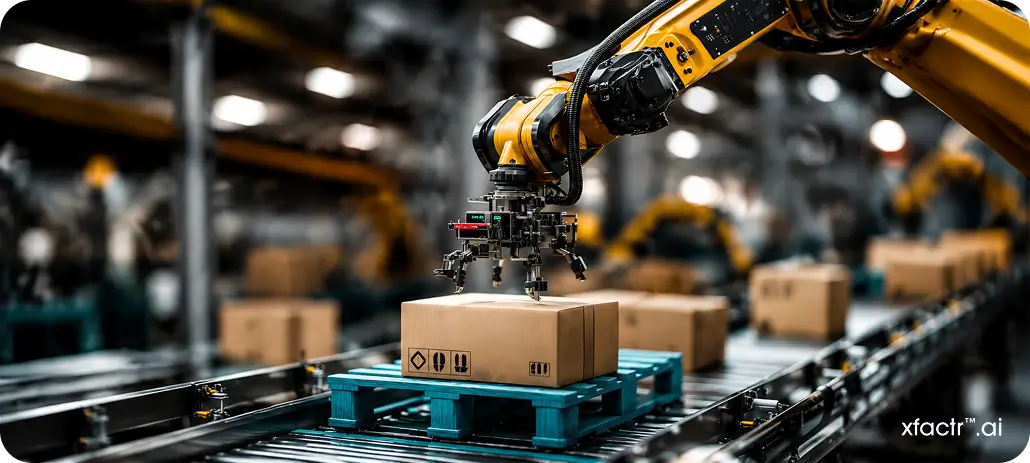
Predictive maintenance works best when AI and IoT work together. IoT sensors collect real-time machine data, while AI analyzes that data to detect issues early and predict equipment failures.
This helps factories monitor machine health continuously, improve operational visibility, and reduce unexpected disruptions. In smart factories, AI and IoT support:
- Equipment reliability
- Production efficiency
- Energy optimization
- Maintenance planning
- Faster decision-making
This connected approach is helping manufacturers build smarter and more efficient factory operations.
Common Challenges in AI Predictive Maintenance Adoption
While predictive maintenance offers many benefits, some factories still face challenges during implementation. Most of these challenges are related to infrastructure, data management, and adapting to new technologies.
Some common challenges include:
- Older machines may not support advanced sensors or AI-based monitoring systems
- Incomplete or poor-quality machine data can reduce prediction accuracy
- Initial setup and implementation costs may feel expensive for some businesses
- Legacy factory systems can make integration slower and more complex
- Some teams may resist shifting from traditional maintenance methods
- Many factories may not have in-house AI or data analysis expertise
Many manufacturers now partner with XFactr.AI to simplify AI adoption and build scalable predictive maintenance solutions for modern factories.
The Future of Predictive Maintenance in Manufacturing
Predictive maintenance is becoming an important part of modern manufacturing as factories invest more in AI-driven operations and smart monitoring systems.
According to McKinsey & Company, predictive maintenance can reduce machine downtime by 30% to 50% and increase machine life by 20% to 40%. Research from Deloitte also shows that it can improve equipment uptime by 10% to 20% while reducing maintenance costs.
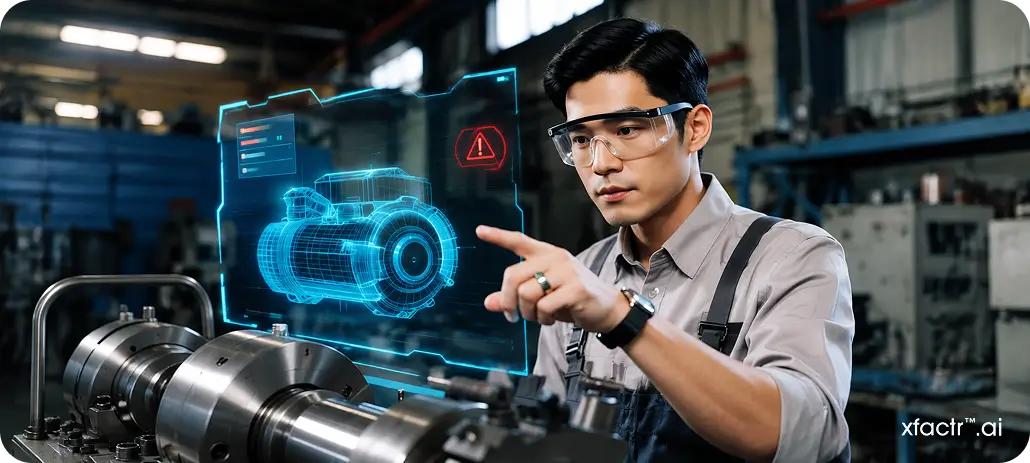
As AI technology continues evolving, future factories are expected to use digital twins, edge AI, autonomous maintenance systems, and self-monitoring equipment to improve efficiency and reduce operational risks.
Final Thought
Modern manufacturing can no longer rely only on reactive maintenance. Rising downtime, higher operational costs, and production pressure are pushing factories toward smarter maintenance strategies. AI-powered predictive maintenance helps businesses reduce equipment failures, improve operational efficiency, and maintain more stable production environments.
As factories continue adopting AI and automation, choosing the right technology partner becomes important. XFactr.AI helps manufacturers build scalable predictive maintenance solutions, improve equipment reliability, and create smarter factory operations with AI-driven monitoring and automation systems. Contact us, today.
FAQ
1. How can factories reduce unexpected machine breakdowns?
Factories can reduce unexpected breakdowns by using AI-powered predictive maintenance systems that monitor machine health in real time. These systems identify early warning signs through sensor data, helping maintenance teams fix issues before equipment failures affect production.
2. Can small and mid-sized factories use AI-powered predictive maintenance?
Yes, predictive maintenance is no longer limited to large manufacturing companies. Many small and mid-sized factories now use scalable AI monitoring solutions to reduce downtime, improve equipment reliability, and avoid unexpected repair costs without replacing all existing equipment.
3. Where can I get AI-powered predictive maintenance solutions for my factory?
At XFactr.AI, we help manufacturers implement AI-powered predictive maintenance solutions designed for modern factory operations. Our team works with businesses to improve equipment monitoring, reduce downtime, and build smarter maintenance systems without major operational disruption.
Start Your AI Transformation Today
Blogs